
Catalog Advanced Search
-
Contains 4 Component(s), Includes Credits Includes a Live Web Event on 2026/10/15 at 12:00 PM (MDT)
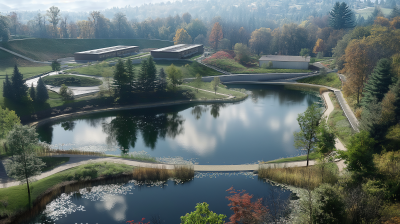
Many stormwater basins were constructed prior to water quality requirements and it is often not feasible to retrofit them to provide water quality using traditional methods because it requires a larger pond volume. This presentation will introduce a new method to retrofit basins to provide water quality that does not require the pond volume to be increased. Retrofitting existing basins to provide water quality is often not feasible due to need for increased pond volume. However, a new method of providing water quality allows the current peak flows to be maintained, therefore not requiring a larger pond volume and has been tested to show 90% TSS removal. This presentation will explain how this new method can be effective to retrofit existing basins.
Retrofitting Stormwater Basins for Water Quality
Presenter: Jamie McCutchen | President - Rymar Waterworks Innovations
Level: Intermediate
Duration: 1 hour
Type of Course: Webinar - On-Demand
Date: October 15th, 2026 @ 12:00pm MST
Summary: Many stormwater basins were constructed prior to water quality requirements and it is often not feasible to retrofit them to provide water quality using traditional methods because it requires a larger pond volume. This presentation will introduce a new method to retrofit basins to provide water quality that does not require the pond volume to be increased.
Retrofitting existing basins to provide water quality is often not feasible due to need for increased pond volume. However, a new method of providing water quality allows the current peak flows to be maintained, therefore not requiring a larger pond volume and has been tested to show 90% TSS removal. This presentation will explain how this new method can be effective to retrofit existing basins.
Understanding the benefits of sustainable fertilizers is critical to improving soil health and enhancing plant resilience to biotic and abiotic stresses, including heat and drought conditions. Many field water sources currently have high salinity levels, which can lead to soil compaction and poor growing conditions. Nrgizer helps improve plant tolerance to salinity, supports healthier soil structure, and enhances seed germination.
Jamie McCutchen
President, Rymar Waterworks Innovations
James (Jamie) D. McCutchen, Jr., PE
Principal & Founder of Rymar Waterworks Innovations
Jamie attended Clemson University and obtained a Bachelor of Science in Civil Engineering in 1992. He founded CCAD Engineering in 1999 to provide site development services, primarily in the private sector. His expertise lies in most aspects of land development for commercial and residential sites with an emphasis on stormwater management and sediment & erosion control. He is a licensed Professional Engineer in South Carolina, North Carolina and Georgia.
In 2013, Jamie invented the Marlee Float™ skimmer, an erosion control device used in sediment basins and permanent BMPs and founded Rymar Waterworks Innovations as the manufacturer, which is located in Greenville, South Carolina. Jamie is Principal of Rymar Waterworks Innovations
This event is worth one (1) Professional Development Hours.
IECA is committed to fostering an environment of continuous learning and professional growth. Through a process of peer review and content selection standards, we ensure that our content is robust, relevant, and aligned with industry standards. We respect the authority of certification organizations to evaluate and accept professional development activities according to their criteria, acceptance of professional development credits is at the discretion of your certifying organization.
-
Register
- Non member - $40
- Professional member - $15
- Professional Plus member - Free!
- Professional Plus Org member - Free!
- Student member - $15
- Young Professional member - $15
- Emeritus member - $15
- Discounted Professional member - $15
- Australia Member - $15
- Australia Non-Member - $40
- Australasia Professional Plus - Free!
- Australasia Professional Plus Org - Free!
- Australian Student - $15
- New Zealand Member - $15
- New Zealand Professional Plus Org - Free!
- New Zealand Professional Plus - Free!
- New Zealand Student - $15
- More Information
-
Register
-
Contains 4 Component(s), Includes Credits Includes a Live Web Event on 2026/10/07 at 11:45 AM (MDT)
Erosion control practitioners are often called upon to work below the ordinary high water to complete projects in the areas regulated by the army corps of engineers. There is volumes of manuals for geomorphology and successful stream restoration and revegetation, and there is a depth of engineering manuals for large water bodies to install coffer cells and work off of barges. However the guidance on temporary works to divert small rivers, creeks and streams before and during construction begins is difficult to find. This presentation aims to fill some of that gap with strategies for working in live streams on the small or mid-size project that requires modification to the stream bed.
Stream Diversion Tactics for Good Stewardship
Adam Lyman, PE, CPESC, CEO, Syman Inc.
Date: Wednesday 7th October 2026
Time: 11.45am 1.00pm PST
Level: Intermediate
Duration: 1.25 hour
Type of Course: Webinar – Live
PDH credits: 1
Erosion control practitioners are often called upon to work below the ordinary high water to complete projects in the areas regulated by the army corps of engineers. There is volumes of manuals for geomorphology and successful stream restoration and revegetation, and there is a depth of engineering manuals for large water bodies to install coffer cells and work off of barges. However the guidance on temporary works to divert small rivers, creeks and streams before and during construction begins is difficult to find. This presentation aims to fill some of that gap with strategies for working in live streams on the small or mid-size project that requires modification to the stream bed.
Learning Outcomes.
- Understand the information needed to plan a stream diversion
- Fill your toolbox with common diversion techniques
- Learn critical checks to ensure the diversion will be successful
HOSTED BY:
Adam Lyman
Engineering Manager
Adam Lyman is the CEO of Syman Inc. with more than 23 years of professional experience in stormwater compliance, geotechnical, civil engineering. Experience includes primarily transportation, land development, and public works projects with an emphasis in stormwater and non-stormwater discharge compliance for construction and industrial sites. Adam has prepared dewatering, temporary shoring and stream diversion plans with many levels of complexity for all kinds of construction projects. Mr. Lyman is also a certified construction site stormwater instructor for the City of Boise and Idaho Transportation Department. Adam is a Certified Professional in Erosion and Sediment Control and a Professional Civil Engineer licensed in Idaho, Oregon, Nevada, and Utah.
This event is worth one (1) Professional Development Hours.
IECA is committed to fostering an environment of continuous learning and professional growth. Through a process of peer review and content selection standards, we ensure that our content is robust, relevant, and aligned with industry standards. We respect the authority of certification organizations to evaluate and accept professional development activities according to their criteria, acceptance of professional development credits is at the discretion of your certifying organization.
-
Register
- Non member - $40
- Professional member - $15
- Professional Plus member - Free!
- Professional Plus Org member - Free!
- Student member - $15
- Young Professional member - $15
- Emeritus member - $15
- Discounted Professional member - $15
- Australia Member - $15
- Australia Non-Member - $40
- Australasia Professional Plus - Free!
- Australasia Professional Plus Org - Free!
- Australian Student - $15
- New Zealand Member - $15
- New Zealand Professional Plus Org - Free!
- New Zealand Professional Plus - Free!
- New Zealand Student - $15
- More Information
-
Contains 4 Component(s), Includes Credits Includes a Live Web Event on 2026/09/30 at 12:45 PM (MDT)
Accurate prediction of soil erosion is a critical component of erosion and sediment control planning, stormwater compliance, and construction project design. RUSLE2 (Revised Universal Soil Loss Equation Version 2) has become the preferred erosion prediction model for numerous transportation, infrastructure, and regulatory applications, including compliance with portions of California's Construction General Permit and certain Total Maximum Daily Load (TMDL) requirements. Despite its widespread use, many engineers and environmental professionals rely on RUSLE2 without fully understanding the scientific principles, assumptions, limitations, and regulatory context underlying the model. This webinar provides a technical foundation for understanding how RUSLE2 estimates soil loss, when it should be applied, and how it supports defensible erosion prediction and compliance decisions.
RUSLE2 Demystified – Workshop 1 of 3: Understanding RUSLE2 - Foundations for Defensible Erosion Modeling
Melanie Sotelo | Associate Vice President & Director of Environmental Service| Casc Engineering and Consulting
Date: Wednesday 30th September 2026
Time: 11.45am 1.00pm PST
Level: Intermediate
Duration: 1.25 hour
Type of Course: Webinar – Live
PDH credits: 1
Accurate prediction of soil erosion is a critical component of erosion and sediment control planning, stormwater compliance, and construction project design. RUSLE2 (Revised Universal Soil Loss Equation Version 2) has become the preferred erosion prediction model for numerous transportation, infrastructure, and regulatory applications, including compliance with portions of California's Construction General Permit and certain Total Maximum Daily Load (TMDL) requirements. Despite its widespread use, many engineers and environmental professionals rely on RUSLE2 without fully understanding the scientific principles, assumptions, limitations, and regulatory context underlying the model. This webinar provides a technical foundation for understanding how RUSLE2 estimates soil loss, when it should be applied, and how it supports defensible erosion prediction and compliance decisions.
Learning Outcomes.
- Explain the physical processes of soil erosion represented within RUSLE2.
- Describe the primary factors influencing erosion prediction, including rainfall erosivity, soil erodibility, topography, vegetative cover, and management practices.
- Identify the regulatory drivers supporting the use of RUSLE2 for erosion prediction and compliance.
- Explain how RUSLE2 estimates average annual soil loss and sediment delivery.
- Recognize the capabilities and limitations of RUSLE2 when evaluating erosion control alternatives.
HOSTED BY:
Melanie Sotelo
Director of Environmental Services
CASC Engineering and Consulting
Melanie Sotelo is a seasoned environmental professional with over 30 years of experience in stormwater management and construction compliance. She currently serves as the Director of Environmental Services at CASC Engineering and Consulting, where she leads initiatives in civil and environmental engineering with a strong focus on water quality and regulatory compliance. Melanie holds multiple industry-recognized certifications, including CPSWQ (Certified Professional in Storm Water Quality), CPESC (Certified Professional in Erosion and Sediment Control), QSD/P (Qualified SWPPP Developer/Practitioner), and ToR (Trainer of Record). She is also an active member of the State’s Construction General Permit Training Team, contributing to the development and delivery of statewide training programs.
With over 20 years of training experience, Melanie has delivered hundreds of sessions to QSDs, QSPs, municipal staff, and regulatory professionals. Her training portfolio spans in-person workshops, conference presentations, and online webinars. She is known for her engaging and interactive teaching style, which emphasizes real-world application, audience participation, and regulatory clarity. Melanie’s ability to translate complex permit requirements into practical strategies makes her a trusted educator and mentor in the stormwater compliance community.
This event is worth one (1) Professional Development Hours.
IECA is committed to fostering an environment of continuous learning and professional growth. Through a process of peer review and content selection standards, we ensure that our content is robust, relevant, and aligned with industry standards. We respect the authority of certification organizations to evaluate and accept professional development activities according to their criteria, acceptance of professional development credits is at the discretion of your certifying organization.
-
Register
- Non member - $40
- Professional member - $15
- Professional Plus member - Free!
- Professional Plus Org member - Free!
- Student member - $15
- Young Professional member - $15
- Emeritus member - $15
- Discounted Professional member - $15
- Australia Member - $15
- Australia Non-Member - $40
- Australasia Professional Plus - Free!
- Australasia Professional Plus Org - Free!
- Australian Student - $15
- New Zealand Member - $15
- New Zealand Professional Plus Org - Free!
- New Zealand Professional Plus - Free!
- New Zealand Student - $15
- More Information
-
Contains 3 Component(s), Includes Credits Includes a Live Web Event on 2026/09/29 at 8:00 PM (MDT)
The presentation will cover how to build confidence for young professionals attending the IECA conference for the first time (or returning) and go through a few strategies and activities to create valuable connections and learnings during and after attending.
Conference Cruisin': Attend the IECA Australasia Conference with confidence
Tam Do, Environment Advisor - Northeast Link – Eastern Freeway Upgrade Tram to Springvale Alliance.
Joe Johnson, Business Development Manager - NZ, PGG Wrightson Turf.Level: Beginner
Duration: 30 mins
Type of Course: Webinar - LiveGet a clear, practical game plan for the IECA Australasia Conference & Expo— 21 - 23 October 2026 at the Shangri La, Sydney. We’ll show you how to maximise learning, build real industry connections, and navigate the Expo with confidence so you leave Sydney with momentum—and next steps you can use right away.
Why this webinar
The presentation will cover how to build confidence for young professionals attending the IECA Australasia conference for the first time (or returning) and go through a few strategies and activities to create valuable connections and learnings during and after attending.
You’ll learn how to:- Prepare: Explore the Pheedloop app to see who is attending, which talks you want to attend and any stalls that catch your eye.
- Engage: Connect with other industry professionals, ask plenty of questions, participate in exhibitor bingo, attend the talks and be open to the new ideas and case studies being presented.
- Act: Follow up with new connections, apply new learnings at work, continue to explore ideas/products.
Joe Johnson
Business Development Manager - NZ
DuraVeg From PGG Wrightson Turf
Joe Johnson brings over two decades of experience in revegetation and erosion and sediment control, having begun his career with PGG Wrightson Turf and worked across complex project environments. Early in his career, he collaborated closely with government agencies and industry partners during the Christchurch earthquake recovery, helping introduce innovative hydraulic erosion control technologies for challenging terrain. He has attended numerous International Erosion Control Association (IECA) conferences at both chapter and global levels, gaining firsthand insight into how conferences support professional growth.
Joe currently serves on the Global Board of Directors of the International Erosion Control Association (IECA) previously being the Vice President of Young Professionals and also held leadership roles on the IECA Australasian Chapter Board, including Treasurer and Vice President. A strong advocate for education, networking, and professional development, Joe brings a practical perspective on how Young Professionals can strategically prepare for, engage in, and maximise the long-term value of attending industry conferences.
Tam Do
Environmental Advisor
Eastern Freeway Upgrade - Tram to Springvale Alliance
Tam Do is an Environment Advisor with six years of experience across construction and environmental consulting, working on major infrastructure projects spanning rail, tunnelling and roads. She is currently working on the North East Link – Eastern Freeway Upgrade Tram to Springvale Alliance.
Passionate about collaboration and practical problem solving, Tam enjoys working across disciplines to navigate complex environmental challenges and deliver successful project outcomes. She was the recipient of the 2023 IECA Vital Chem Young Professional Scholarship, helping to continue her commitment to professional development and the environmental industry
This event is worth one (1) Professional Development Hours.
IECA is committed to fostering an environment of continuous learning and professional growth. Through a process of peer review and content selection standards, we ensure that our content is robust, relevant, and aligned with industry standards. We respect the authority of certification organizations to evaluate and accept professional development activities according to their criteria, acceptance of professional development credits is at the discretion of your certifying organization.
-
Register
- Non member - Free!
- Professional member - Free!
- Professional Plus member - Free!
- Professional Plus Org member - Free!
- Student member - Free!
- Young Professional member - Free!
- Emeritus member - Free!
- Discounted Professional member - Free!
- Australia Member - Free!
- Australia Non-Member - Free!
- Australasia Professional Plus - Free!
- Australasia Professional Plus Org - Free!
- Australian Student - Free!
- New Zealand Member - Free!
- New Zealand Professional Plus Org - Free!
- New Zealand Professional Plus - Free!
- New Zealand Student - Free!
- More Information
-
Contains 4 Component(s), Includes Credits Includes a Live Web Event on 2026/09/17 at 12:00 PM (MDT)
Trackout control remains one of the most persistent compliance challenges on construction sites, yet many of the industry’s standard practices have not kept pace with evolving regulatory expectations and available technologies. While rock construction entrances continue to be the most commonly used method, they are increasingly scrutinized for their limited effectiveness, high maintenance demands, and environmental impact. As a result, many construction teams rely on approaches that are both costly and insufficient for today’s performance standards. Despite this growing concern, there is still a significant knowledge gap surrounding modern alternatives to traditional rock entrances. Many practitioners are unaware of the full range of construction exit best management practices (BMPs) now available, including reusable synthetic trackout mats, wheel washes, and steel grate systems. There are also educational voids in how these options compare in terms of cost, durability, environmental performance, and regulatory compliance. This presentation aims to fill those gaps by offering a comprehensive look at modern, evidence-based methods for construction exit management. By examining the strengths and limitations of various BMPs and presenting real-world insights into system selection and implementation, the session will equip attendees with the information needed to reduce sediment tracking, streamline operations, and improve compliance outcomes. Ultimately, the goal is to support a shift toward more efficient, sustainable, and cost-effective trackout control practices across the construction industry.
Rethinking Trackout Control: Modern Approaches to Construction Exit Management
Chloe Moretz - FODS Trackout Control Mats
Level: Intermediate
Duration: 1 hour
Type of Course: Webinar - On-Demand
Date: September 17th, 2026 @ 12:00pm MST
Trackout control remains one of the most persistent compliance challenges on construction sites, yet many of the industry’s standard practices have not kept pace with evolving regulatory expectations and available technologies. While rock construction entrances continue to be the most commonly used method, they are increasingly scrutinized for their limited effectiveness, high maintenance demands, and environmental impact. As a result, many construction teams rely on approaches that are both costly and insufficient for today’s performance standards. Despite this growing concern, there is still a significant knowledge gap surrounding modern alternatives to traditional rock entrances. Many practitioners are unaware of the full range of construction exit best management practices (BMPs) now available, including reusable synthetic trackout mats, wheel washes, and steel grate systems. There are also educational voids in how these options compare in terms of cost, durability, environmental performance, and regulatory compliance. This presentation aims to fill those gaps by offering a comprehensive look at modern, evidence-based methods for construction exit management. By examining the strengths and limitations of various BMPs and presenting real-world insights into system selection and implementation, the session will equip attendees with the information needed to reduce sediment tracking, streamline operations, and improve compliance outcomes. Ultimately, the goal is to support a shift toward more efficient, sustainable, and cost-effective trackout control practices across the construction industry.
This presentation examines why traditional rock construction entrances are becoming less effective and increasingly difficult to maintain under modern regulatory and environmental demands. It introduces a range of alternative construction exit BMPs, including reusable synthetic trackout mats, wheel washes, and steel grate systems. Attendees will learn how these modern solutions compare in performance, cost, and sustainability, and how to select the right system for their site conditions. The session ultimately aims to help construction professionals improve compliance, reduce sediment tracking, and adopt more efficient and environmentally responsible trackout control practices.
Chloe Moretz
FODS
FODS Trackout Control Mats
Chloe Moretz is the Sales Manager at FODS Trackout Control Mats, based in Denver, CO, where she focuses on specifications and engineering to help contractors, distributors, and agencies bring modern solutions to their projects. Since graduating college, Chloe has built her career in environmental construction, an innovative industry she has enjoyed for over a decade. She works closely with engineers and project teams to align products with real-world site conditions and evolving regulatory standards. Drawing on more than ten years across diverse markets, she brings practical insight into how teams evaluate and adopt effective, sustainable solutions.
This event is worth one (1) Professional Development Hours.
IECA is committed to fostering an environment of continuous learning and professional growth. Through a process of peer review and content selection standards, we ensure that our content is robust, relevant, and aligned with industry standards. We respect the authority of certification organizations to evaluate and accept professional development activities according to their criteria, acceptance of professional development credits is at the discretion of your certifying organization.
-
Register
- Non member - $40
- Professional member - $15
- Professional Plus member - Free!
- Professional Plus Org member - Free!
- Student member - $15
- Young Professional member - $15
- Emeritus member - $15
- Discounted Professional member - $15
- Australia Member - $15
- Australia Non-Member - $40
- Australasia Professional Plus - Free!
- Australasia Professional Plus Org - Free!
- Australian Student - $15
- New Zealand Member - $15
- New Zealand Professional Plus Org - Free!
- New Zealand Professional Plus - Free!
- New Zealand Student - $15
- More Information
-
Register
-
Contains 4 Component(s), Includes Credits
Geomorphologists love erosion because it is a basic process in natural landscapes, but humans struggle to live with dynamic rivers and coasts, and there are many good reasons to stop erosion. However, managers are moving away from the view that all erosion of rivers and coasts is bad, and has to be controlled, toward a more nuanced approach. Sometimes the answer is not to control the erosion at all (e.g. the erosion is doing good, you make the problem worse, it is futile, it is a distraction from the real problem, and more), but sometimes to use land-use planning tools to give the rivers and coasts space to move. More and more we are accepting that vegetation is the key to long-term, sustainable management of erosion (nature-based solutions) but this just slows the rate of the erosion rather than eliminating it. I conclude by identifying some situations where we should control erosion when we don't (e.g. it can make flooding worse). In short, there are many reasons for us to learn to live with erosion.
Living with erosion: new approaches to managing erosion of rivers and coasts
Ian Rutherfurd | Professor |University of Melbourne, Alluvium Consulting
Level: Intermediate
Duration: 1 hour
Type of Course: Webinar – On Demand
Geomorphologists love erosion because it is a basic process in natural landscapes, but humans struggle to live with dynamic rivers and coasts, and there are many good reasons to stop erosion. However, managers are moving away from the view that all erosion of rivers and coasts is bad, and has to be controlled, toward a more nuanced approach. Sometimes the answer is not to control the erosion at all (e.g. the erosion is doing good, you make the problem worse, it is futile, it is a distraction from the real problem, and more), but sometimes to use land-use planning tools to give the rivers and coasts space to move. More and more we are accepting that vegetation is the key to long-term, sustainable management of erosion (nature-based solutions) but this just slows the rate of the erosion rather than eliminating it. I conclude by identifying some situations where we should control erosion when we don't (e.g. it can make flooding worse). In short, there are many reasons for us to learn to live with erosion.
HOSTED BY:
Ian Rutherfrud
Professor
University of Melbourne, Alluvium Consulting
Ian is a fluvial geomorphologist with 30 years working with governments and communities in stream and catchment management. His research spans basic and applied river processes, and he has completed over 150 publications, $7m in funded research projects, and 70 consulting projects. Ian also has rich experience in education and professional training of all types.
After spending twenty years at the University of Melbourne (of which several years were spent seconded to the Victorian State government working in river policy) Ian joined Alluvium in a part-time capacity. In addition to his involvement in many consulting projects, he chairs the Alluvium Foundation and helps coordinate the Research and Insights Program. He brings deep experience in the application of research to all aspects of river and water management, as well as excellent connections across the water sector.
This event is worth one (1) Professional Development Hours.
IECA is committed to fostering an environment of continuous learning and professional growth. Through a process of peer review and content selection standards, we ensure that our content is robust, relevant, and aligned with industry standards. We respect the authority of certification organizations to evaluate and accept professional development activities according to their criteria, acceptance of professional development credits is at the discretion of your certifying organization.
-
Register
- Non member - $40
- Professional member - $15
- Professional Plus member - Free!
- Professional Plus Org member - Free!
- Student member - $15
- Young Professional member - $15
- Emeritus member - $15
- Discounted Professional member - $15
- Australia Member - $15
- Australia Non-Member - $40
- Australasia Professional Plus - Free!
- Australasia Professional Plus Org - Free!
- Australian Student - $15
- New Zealand Member - $15
- New Zealand Professional Plus Org - Free!
- New Zealand Professional Plus - Free!
- New Zealand Student - $15
- More Information
-
Register
-
Contains 4 Component(s), Includes Credits
This webinar will provide the essential background understanding that SWPPP Developers and Practitioners to understand and navigate these updated requirements. Attendees will learn about the requirements for dewatering and passive treatment systems and how to track the weather forecasts to identify a Qualified Precipitation Event (QPE). This timely webinar offers practical guidance to adapt stormwater management strategies in light of the new permit requirements, in pursuit of improved water quality outcomes.
Understanding QPE Forecasts, Dewatering, and Passive Treatment under the 2022 CGP
Presenters:
Matthew Renaud | Stormwater Regional Technical Consultant | Terracon
Melanie Sotello | Director of Environmental Services | CASC Engineering and ConsultingDate: Wednesday 12th August 2026
Level: Intermediate
Duration: 1.25 hour
Type of Course: Webinar – On-Demand
PDH credits: 1
With the California Construction General Permit (CGP) now fully implemented, significant requirements now exist regarding site dewatering, using passive treatment, and weather thresholds in stormwater monitoring. These changes present new challenges and opportunities for stormwater professionals to effectively maintain water quality and permit compliance.
This webinar will provide the essential background understanding that SWPPP Developers and Practitioners to understand and navigate these updated requirements. Attendees will learn about the requirements for dewatering and passive treatment systems and how to track the weather forecasts to identify a Qualified Precipitation Event (QPE). This timely webinar offers practical guidance to adapt stormwater management strategies in light of the new permit requirements, in pursuit of improved water quality outcomes.
- Learn how to track a storm to determine whether a QPE exists, and what actions are needed to be taken, and by when.
- Be able to identify when the Dewatering requirements of the CGP are required, or if other discharge permit(s) have jurisdiction.
- Be able to identify what the requirements are for a project to be able to utilize Passive Treatment as a means of meeting discharge NAL requirements.
HOSTED BY:
Matthew Renaud
Senior Consultant Water Resources
NVS
Matthew Renaud is the Stormwater Regional Technical Director for Terracon and has 15 years of extensive experience in NPDES Stormwater Permitting, erosion and sediment control, and construction storm water compliance. Certified CPESC, CESSWI, and Qualified SWPPP Developer/Practitioner Trainer of Record, with a focus on BMP implementation and innovative practices. Skilled in training and presenting on topics such as pollutant source control, permit requirements, water quality monitoring, and best practices for CGP compliance.
Melanie Sotelo
Director of Environmental Services
CASC Engineering and Consulting
Melanie Sotelo is a seasoned environmental professional with over 30 years of experience in stormwater management and construction compliance. She currently serves as the Director of Environmental Services at CASC Engineering and Consulting, where she leads initiatives in civil and environmental engineering with a strong focus on water quality and regulatory compliance. Melanie holds multiple industry-recognized certifications, including CPSWQ (Certified Professional in Storm Water Quality), CPESC (Certified Professional in Erosion and Sediment Control), QSD/P (Qualified SWPPP Developer/Practitioner), and ToR (Trainer of Record). She is also an active member of the State’s Construction General Permit Training Team, contributing to the development and delivery of statewide training programs.
With over 20 years of training experience, Melanie has delivered hundreds of sessions to QSDs, QSPs, municipal staff, and regulatory professionals. Her training portfolio spans in-person workshops, conference presentations, and online webinars. She is known for her engaging and interactive teaching style, which emphasizes real-world application, audience participation, and regulatory clarity. Melanie’s ability to translate complex permit requirements into practical strategies makes her a trusted educator and mentor in the stormwater compliance community.
This event is worth one (1) Professional Development Hours.
IECA is committed to fostering an environment of continuous learning and professional growth. Through a process of peer review and content selection standards, we ensure that our content is robust, relevant, and aligned with industry standards. We respect the authority of certification organizations to evaluate and accept professional development activities according to their criteria, acceptance of professional development credits is at the discretion of your certifying organization.
-
Register
- Non member - $40
- Professional member - $15
- Professional Plus member - Free!
- Professional Plus Org member - Free!
- Student member - $15
- Young Professional member - $15
- Emeritus member - $15
- Discounted Professional member - $15
- Australia Member - $15
- Australia Non-Member - $40
- Australasia Professional Plus - Free!
- Australasia Professional Plus Org - Free!
- Australian Student - $15
- New Zealand Member - $15
- New Zealand Professional Plus Org - Free!
- New Zealand Professional Plus - Free!
- New Zealand Student - $15
- More Information
-
Contains 4 Component(s), Includes Credits
Climate-related storms and fires cause a great deal of damage to roads and rural infrastructure, causing erosion, damage, delaus and social impacts, and expensive repairs. Application of "best engineering practices" and climate resilience measures can reduce or prevent a lot of damage from weather related events. Low-volume roads and rural infrastructure suffer an increasing amount of damage today from climate-change related impacts from storms, flooding, droughts, and fires. Often damage is caused or increased by poor construction practices, lack of drainage control, over-steepened slopes, and lack of application of "best engineering practices". Additionally, damage can be reduced or avoided by specific climate resilience measures including adequate surface drainage measures, appropriately sized drainage structures, use of "stream simulation" designs, cost- effective slope stabilization techniques, hardened road surfaces, etc. Many "storm-proofing" measures are relatively easy to implement and are very cost-effective, particularly given the high cost of repairs today. General "Best Engineering Practices" and specific resiliency, climate adaptation, or vulnerability reduction measures will be presented.
CLIMATE RESILIENT RURAL AND LOW-VOLUME ROADS
Gordon Keller | Geotechnical Engineer, GENESEE GEOTECHNICAL
Level: Intermediate
Duration: 1 hour
Type of Course: Webinar - On-Demand
Climate-related storms and fires cause a great deal of damage to roads and rural infrastructure, causing erosion, damage, delaus and social impacts, and expensive repairs. Application of "best engineering practices" and climate resilience measures can reduce or prevent a lot of damage from weather related events.
Low-volume roads and rural infrastructure suffer an increasing amount of damage today from climate-change related impacts from storms, flooding, droughts, and fires. Often damage is caused or increased by poor construction practices, lack of drainage control, over-steepened slopes, and lack of application of "best engineering practices". Additionally, damage can be reduced or avoided by specific climate resilience measures including adequate surface drainage measures, appropriately sized drainage structures, use of "stream simulation" designs, cost- effective slope stabilization techniques, hardened road surfaces, etc. Many "storm-proofing" measures are relatively easy to implement and are very cost-effective, particularly given the high cost of repairs today. General "Best Engineering Practices" and specific resiliency, climate adaptation, or vulnerability reduction measures will be presented.
Chloe Moretz
FODS
FODS Trackout Control Mats
Chloe Moretz is the Sales Manager at FODS Trackout Control Mats, based in Denver, CO, where she focuses on specifications and engineering to help contractors, distributors, and agencies bring modern solutions to their projects. Since graduating college, Chloe has built her career in environmental construction, an innovative industry she has enjoyed for over a decade. She works closely with engineers and project teams to align products with real-world site conditions and evolving regulatory standards. Drawing on more than ten years across diverse markets, she brings practical insight into how teams evaluate and adopt effective, sustainable solutions.
This event is worth one (1) Professional Development Hours.
IECA is committed to fostering an environment of continuous learning and professional growth. Through a process of peer review and content selection standards, we ensure that our content is robust, relevant, and aligned with industry standards. We respect the authority of certification organizations to evaluate and accept professional development activities according to their criteria, acceptance of professional development credits is at the discretion of your certifying organization.
-
Register
- Non member - $40
- Professional member - $15
- Professional Plus member - Free!
- Professional Plus Org member - Free!
- Student member - $15
- Young Professional member - $15
- Emeritus member - $15
- Discounted Professional member - $15
- Australia Member - $15
- Australia Non-Member - $40
- Australasia Professional Plus - Free!
- Australasia Professional Plus Org - Free!
- Australian Student - $15
- New Zealand Member - $15
- New Zealand Professional Plus Org - Free!
- New Zealand Professional Plus - Free!
- New Zealand Student - $15
- More Information
-
Register
-
Contains 4 Component(s), Includes Credits
From nurdles and swarf to security tags, plastic strapping, and faded hi-vis scraps—everyday materials are quietly escaping our worksites, supply chains, and stormwater systems. Once they leave our hands, they don’t just vanish—they travel. They move through gutters, drains, and rivers, and eventually join a much bigger story of ocean pollution. In this keynote, Heidi Tait—CEO and founder of the Tangaroa Blue Foundation and driving force behind the Australian Marine Debris Initiative (AMDI)—reveals what two decades of national data tell us about where pollution really begins, and how smart design, site practices, and stewardship can stop it before it starts. From turning recovered fishing line into new sunglasses to partnering with councils on stormwater trap programs, Heidi shares surprising case studies that connect land-based decisions to ocean outcomes. You’ll see how construction sites, councils, and industries are leading change by rethinking waste, closing the loop, and collaborating across boundaries. This session will challenge you to look beyond the clean-up and ask: What’s leaking from my site, my system, or my sector—and how can we design it out for good?
Rethinking Rubbish: Innovation on the Frontlines of Pollution
Heidi Tait |CEO and Founder Tangaroa Blue Foundation
Level: Intermediate
Duration: 1 hour
Type of Course: Webinar – On Demand
From nurdles and swarf to security tags, plastic strapping, and faded hi-vis scraps—everyday materials are quietly escaping our worksites, supply chains, and stormwater systems. Once they leave our hands, they don’t just vanish—they travel. They move through gutters, drains, and rivers, and eventually join a much bigger story of ocean pollution.
In this webinar, Heidi Tait—CEO and founder of the Tangaroa Blue Foundation and driving force behind the Australian Marine Debris Initiative (AMDI)—reveals what two decades of national data tell us about where pollution really begins, and how smart design, site practices, and stewardship can stop it before it starts.
From turning recovered fishing line into new sunglasses to partnering with councils on stormwater trap programs, Heidi shares surprising case studies that connect land-based decisions to ocean outcomes. You’ll see how construction sites, councils, and industries are leading change by rethinking waste, closing the loop, and collaborating across boundaries.
This session will challenge you to look beyond the clean-up and ask: What’s leaking from my site, my system, or my sector—and how can we design it out for good?
HOSTED BY:
Heidi Tait
CEO and Founder
Tangaroa Blue Foundation
Heidi Tait is the Founder and CEO of Tangaroa Blue Foundation, a national not-for-profit dedicated to tackling marine debris—one of the planet’s most urgent environmental issues. Since establishing the organisation in 2004, she has led the creation and growth of the Australian Marine Debris Initiative (AMDI), a collaborative network of volunteers, communities, and partners working to remove and track debris from Australia’s coastlines.
Under Heidi’s leadership, AMDI has mobilised over 250,000 volunteers and 3,500 partner organisations to remove more than 29 million pieces of debris, using this data to drive over 380 targeted Source Reduction Plans. The initiative not only cleans up our shores but addresses the problem at its source through data-driven action, education, and collaboration with industry and government.
In recognition of her impact, Heidi was named one of the top 18 women in ocean conservation by Ocean Geographic in 2018. She continues to lead Tangaroa Blue’s strategic direction and daily operations, ensuring lasting change for Australia’s marine and coastal environments.
This event is worth one (1) Professional Development Hours.
IECA is committed to fostering an environment of continuous learning and professional growth. Through a process of peer review and content selection standards, we ensure that our content is robust, relevant, and aligned with industry standards. We respect the authority of certification organizations to evaluate and accept professional development activities according to their criteria, acceptance of professional development credits is at the discretion of your certifying organization.
-
Register
- Non member - $40
- Professional member - $15
- Professional Plus member - Free!
- Professional Plus Org member - Free!
- Student member - $15
- Young Professional member - $15
- Emeritus member - $15
- Discounted Professional member - $15
- Australia Member - $15
- Australia Non-Member - $40
- Australasia Professional Plus - Free!
- Australasia Professional Plus Org - Free!
- Australian Student - $15
- New Zealand Member - $15
- New Zealand Professional Plus Org - Free!
- New Zealand Professional Plus - Free!
- New Zealand Student - $15
- More Information
-
Register
-
Contains 4 Component(s), Includes Credits
Data center growth is accelerating across the country and prompting agencies to reexamine how stormwater, water use and construction activities are regulated. As expectations evolve, construction teams are seeing new requirements for SWPPP planning, BMP selection, inspections, and documentation. This webinar provides a practical overview of the regulatory themes shaping these changes and what they mean for everyday erosion and sediment control work. Attendees will learn how to anticipate shifting compliance expectations and strengthen coordination with owners, regulators and MS4s. The session emphasizes proactive planning and field-ready strategies that help teams adapt confidently in a changing regulatory landscape.
SWPPP in the Age of AI: How Data Centers Are Rewriting the Stormwater Rulebook
Joe Moore | Director of Sales | Erosion & Construction Solutions
Level: Advanced
Duration: 1 hour
Type of Course: Webinar – On Demand
Data centers and the talk around them are everywhere and they are beginning to reshape how agencies view water use, stormwater risk, and construction oversight. Many in the erosion and sediment control field are feeling these changes on project sites. Unfortunately, many also lack clear guidance on what the shifting regulatory landscape means for SWPPP development and compliance. This presentation fills that gap by outlining the emerging trends, explaining why expectations are evolving, and providing practical steps that contractors, inspectors, and MS4s can use to stay aligned with new requirements.
Data center growth is accelerating across the country and prompting agencies to reexamine how stormwater, water use and construction activities are regulated. As expectations evolve, construction teams are seeing new requirements for SWPPP planning, BMP selection, inspections, and documentation. This webinar provides a practical overview of the regulatory themes shaping these changes and what they mean for everyday erosion and sediment control work. Attendees will learn how to anticipate shifting compliance expectations and strengthen coordination with owners, regulators and MS4s. The session emphasizes proactive planning and field-ready strategies that help teams adapt confidently in a changing regulatory landscape.
Joe Moore
Founder Erosion and Construction Solutions and Siltworm
ESC Solutions and Siltworm
Joe Moore is a Purdue University graduate (West Lafayette, Class of 2001) whose career bridges high volume construction, entrepreneurship, and water quality protection. He began in corporate homebuilding from 2001 to 2008, then returned to his roots in custom construction as the Founder of Moore and Moore Homes. Joe later founded Erosion & Construction Solutions and created Siltworm, recognized as one of the nation’s most effective sediment control devices. He also established Erosion Construction Services, a full- service Stormwater Pollution Prevention implementation company supporting constructors across the state of Indiana. His transition from construction and into pollution prevention was natural, as his love for water resources drove his passion to build success. A Certified Professional in Erosion and Sediment Control (CPESC), Joe brings more than two decades of construction and pollution prevention experience to an industry that continues to evolve under shifting site conditions, expectations, and regulations. Committed to education, clean water resources, and conservation, Joe pairs practical field experience with a deep connection to nature and a focus on sustainable solutions. He serves on the Executive Board of the Indiana MS4 Partnership, the Executive Board of the International Erosion Control Association, and is an active member of the Northwest Indiana Stormwater Advisory Group. Outside of work, Joe coaches CYO girls basketball, is an avid outdoorsman, archery hunter, a salmon fisherman. Joe and his wife have three amazing daughters, an energy filled labrador, and are currently enjoying the “prime years’” of parenting.
This event is worth one (1) Professional Development Hours.
IECA is committed to fostering an environment of continuous learning and professional growth. Through a process of peer review and content selection standards, we ensure that our content is robust, relevant, and aligned with industry standards. We respect the authority of certification organizations to evaluate and accept professional development activities according to their criteria, acceptance of professional development credits is at the discretion of your certifying organization.
-
Register
- Non member - $40
- Professional member - $15
- Professional Plus member - Free!
- Professional Plus Org member - Free!
- Student member - $15
- Young Professional member - $15
- Emeritus member - $15
- Discounted Professional member - $15
- Australia Member - $15
- Australia Non-Member - $40
- Australasia Professional Plus - Free!
- Australasia Professional Plus Org - Free!
- Australian Student - $15
- New Zealand Member - $15
- New Zealand Professional Plus Org - Free!
- New Zealand Professional Plus - Free!
- New Zealand Student - $15
- More Information
-
Register